
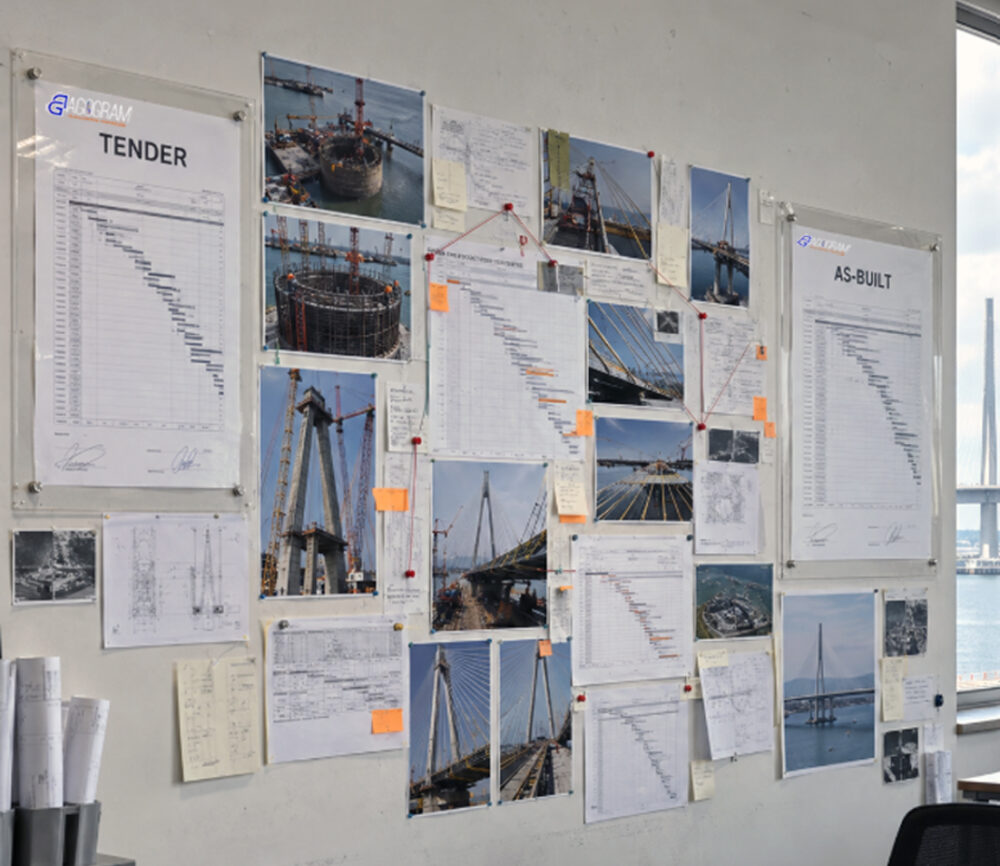
PROGRAMME TYPES
IF ONLY TWO PROGRAMMES ARE FROZEN IN TIME, WHAT SHOULD HAPPEN TO ALL THE OTHERS?
The tender programme records how the contractor intended to deliver the project when the offer was made.
The as-built programme records how the project was ultimately delivered.
Everything created between them has a different purpose.
As design develops, subcontractors are appointed, procurement becomes clearer and site conditions emerge, the programmes required to deliver the project must also be developed.
These may include:
- the contract baseline programme;
- design and procurement programmes;
- construction and short-term working programmes;
- specialist subcontractor programmes;
- testing and commissioning programmes; and
- recovery or mitigation programmes where required.
Each should answer one practical question:
Based on what we know today, how will we deliver the project in accordance with the offer?
Updating these programmes does not mean rewriting history. The tender assumptions and approved baseline should remain traceable while each subsequent programme reflects the current delivery reality.
The distinction is important:
The tender programme preserves the original intention.
The working programmes manage the evolving route to delivery.
The as-built programme preserves the final record.
If every subsequent programme is treated as though it were frozen, it may retain its dates—but lose its value as a project-management tool.
Perhaps the quiet test is this:
Can every programme produced since tender still be traced back to—and demonstrate a credible path for delivering—the original offer?
If the connection between your tender promise, current delivery programme and final record is becoming difficult to see, our experienced planning and project-controls team is available for a practical conversation.